Types of Pens & How to Pick One with the Right Ink

Finding the "right pen" for you is a matter of personal choice and differs with each individual. To illustrate this difference, we blended the thoughts of both our regular blog contributors, Alexandra Richardson and Brett Braley, to give you two unique perspectives on the subject.

Alexandra: If you were anything like me growing up, a trip to buy school supplies was always a fantastic adventure because you got to look at all the fun pens that were stocked at your local office supply store. Luckily as an adult, I still adore looking at a wall of pens in an office supply shop! But now, I actually understand the difference between a Pilot V7, a blue BIC and a Sharpie S-Gel and why I like each of them for their qualities. As this is a Goldspot article, we are also going to talk about the two other types of pens that 10-year-old me had no idea existed… fountain pens and dip pens.

Brett: Finding the right pen isn’t just about having something to write with — it’s about choosing a tool that feels good in your hand, fits your writing style, and works well with the ink you prefer. Whether you’re signing documents, jotting down ideas, or sketching out your next project, the pen you pick can really change the experience. Let’s take a look at the main types of pens out there and how to find the perfect ink to go with them! Who knows, maybe you’ll find a new pen to obsess over along the way!

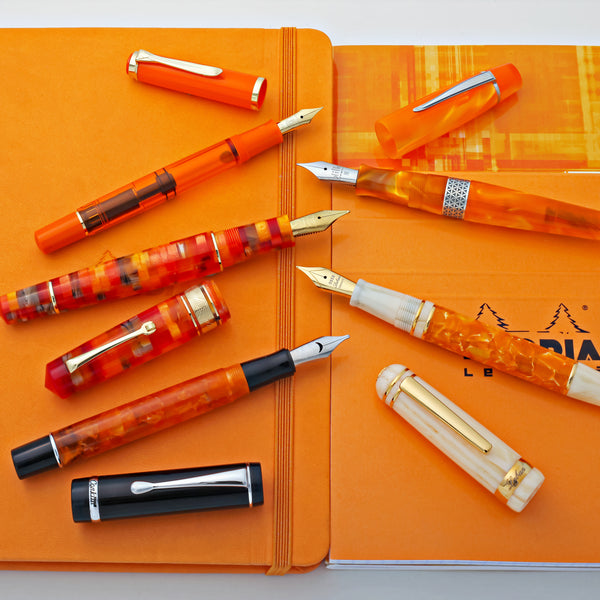
Various demonstrator fountain pens set in a radial pattern.

For Starters, Let's Look at Ballpoint Pens

Regular readers of this blog might cringe, or rapidly scroll away from this section of the article. I get it—if you're already a convert to fountain pens, you won't have any desire to read about anything else. I invite you to reconsider. Ballpoint pens are what most people are acquainted with when they think of a "pen." They're also plenty handy to have around to sign papers, receipts, and write on any paper that might be unfriendly to fountain pens. And, ballpoints make great gifts for people who aren't familiar with a fountain pen, yet.

Brett: Ballpoint pens are the most common writing instrument in the world, known for their practicality and reliability. They use a tiny rotating ball at the tip to dispense oil-based ink, which dries quickly and resists smudging. Because the ink is thicker and less prone to leakage, ballpoints are excellent for everyday use, especially in environments where you need fast-drying ink. They tend to last longer without drying out and generally require less maintenance than other pen types.

However, ballpoints can sometimes feel a bit stiff when writing, needing more pressure to get the ink flowing smoothly, which might tire your hand over long writing sessions. The lines they produce are typically less vibrant and less smooth compared to rollerballs or fountain pens.

Popular Ballpoint Pens

The Pilot Dr. Grip Retractable Ballpoint Pen features an ergonomic design that reduces writing fatigue while delivering a consistent, smooth ink flow, perfect for long writing sessions.

The Caran d’Ache 849 Ballpoint Pen combines Swiss precision engineering with a sleek and durable aluminum body, offering a satisfying weight and balanced feel in the hand.

The Lamy Safari Ballpoint Pen is celebrated for its modern aesthetics and reliable performance, making it a versatile choice for professionals and everyday writers alike.

What's the Point of Ballpoint Pens?

Alexandra: Overall the look and feel of a ballpoint pen can be very similar to a roller ball pen, ink is the real difference between the two. Ballpoint pens use an oil-based ink that is a lot thicker than rollerball ink but is waterproof. Due to the oil-based ink, the line a ballpoint pen produces tends to be a lot thicker than the line a rollerball would produce. For most refillable ballpoint pens you are also limited to 3 refill colours (black, blue & red) so this may not be the best option for you if you prefer to write in other colours. The biggest benefit of a ballpoint is that it can be left uncapped on a desk and the ink will still flow smoothly the next time you pickup the pen and write with it. Single use ballpoints start at about $1 and refillable ones start at below $10 making them a great introduction to the refillable pen world.

Rollerball Pens: Smooth and Effortless

Brett: If you want a pen that writes more fluidly and effortlessly than a ballpoint, rollerball pens are a fantastic choice. They use water-based or gel-based ink, which flows more freely and results in a smoother writing experience and richer colors. The ink glides over the paper, offering a sensation close to fountain pens but with the convenience of a retractable or capped design.

Rollerballs do come with some downsides, though. The water-based ink takes longer to dry and can smudge if you’re not careful, which can be a problem for left-handed writers. Also, rollerball pens tend to run out of ink faster than ballpoints and can be a bit messier if the tip leaks.

Popular Rollerball Pens

The Pilot Precise V5 Rollerball Pen is a classic favorite known for its fine tip and precision ink delivery, making it ideal for detailed note-taking and professional use.

The Esterbrook Estie Rollerball Pen in Raven with Black Trim combines sleek modern design with smooth ink flow, making it a stylish and dependable choice for everyday writing.

The Cross Calais Black Lacquer Rollerball offers a refined look with a rich black lacquer finish and delivers a smooth, consistent line perfect for professional settings.

Why Get a Rollerball Pen?

Alexandra: Most rollerball pens use a water-based liquid ink fairly similar to the ink that goes into fountain pens. The pens take very little hand pressure to get ink flowing which can be excellent for long writing sessions. The makeup of the ink means that you frequently are not limited to just blue and black in your pens and rollerball pens come in hundreds of colours. While single-use rollerball pens can be purchased for a few dollars, refillable ones start at just over $10 and go up from there based on brand and material.

Fountain Pens: The Art of Writing

Brett: Fountain pens have a long-standing reputation as elegant writing instruments that offer a unique and customizable writing experience. They use liquid ink drawn from a reservoir through a nib that flexes with your hand pressure, allowing for beautiful line variation and effortless ink flow. Because the ink is water-based and comes in a wide variety of colors and types, fountain pens can turn everyday writing into a tactile pleasure.

The main drawbacks? Fountain pens require a bit more care and maintenance — cleaning, refilling, and handling nibs properly can take practice. They also demand quality paper to prevent bleeding or feathering of the ink. But once you get the hang of it, the smooth, personalized writing experience is unmatched.

Popular Fountain Pens to Consider

The TWSBI Eco Fountain Pen offers an excellent entry point with its transparent body that lets you watch the ink inside, combined with a smooth nib that performs every time you pick it up.

Like the ballpoint, Lamy Safari Fountain Pens feature a sturdy plastic body and an ergonomic grip that encourages proper hand placement, making it one of the best beginner-friendly fountain pens available

The Sailor 1911 Standard Fountain Pen is a classic Japanese pen known for its fine nibs and rich color options, making it a favorite among fountain pen enthusiasts

Are Fountain Pens Overhyped?

Alexandra: This is probably the pen style Goldspot is most known for and for good reason. There are thousands of fountain pens currently available to buy on their website.

Fountain pens all use a liquid ink when writing and in most cases, they are refilled using bottled ink. Some pens can be refilled using cartridges but in most cases those pens can also be filled using a converter and bottled ink or a syringe and bottled ink. Most fountain pen ink is not waterproof or water resistant but those options are available though they do require a bit more pen maintenance.

These pens also come in a huge variety of nib sizes (writing widths) and nib smiths make it possible for you to totally customize your writing experience. If you want to dip your toes into the fountain pen world without committing to bottled ink or cartridges, Pilot does make a pen called the Varsity which is a single use fountain pen. On the refillable side, Platinum Preppy’s start at $6 and Golsdpot has pens available from that price point to over $12,000. They literally have a fountain pen for everyone’s budget and style.

Fineliners: Precision and Clarity

Fineliners or felt-tip pens are beloved by artists, designers, and writers who need precision and clean, consistent lines. These pens have a porous tip made from felt or fiber, delivering ink smoothly and evenly across paper. They are ideal for detailed drawing, note-taking, and writing where clarity and sharpness matter.

The main limitation of fineliners is that their ink is often water-based and can fade over time. Also, the tips can wear down or fray with heavy use, and fineliners aren’t great for filling large areas quickly.

The Rotring Tikky Graphic Fiber Tip 0.5mm Fineliner provides precise and consistent lines, ideal for technical drawing and detailed writing tasks.

The Pilot Bravo Black Liquid Ink Marker Pen with Bold Point is perfect for bold, clear lines, great for marking or creative projects that demand strong visibility.

The Tom’s Studio Lumos Pro Refillable Single Tip Pen in All Black offers the versatility of refillable ink with a fine tip, making it a reliable choice for artists and writers who appreciate sustainability.

Jelly for Gel Pens

Alexandra: Anyone who was a fan of sparkle or color growing up probably picked up a gel pen at some point or another. In recent years though, the gel pen market has exploded and more practical, waterproof and archival options have started to appear on the market letting you enjoy a normally non-waterproof pen in situations where waterproof ink is essential. These pens are incredibly smooth to write with and are a fantastic option if you are looking for a pen that will effortlessly glide across a page. Several brands have gel refills that can convert a fancy ballpoint or rollerball you love to a smooth writing gel pen. Like the other single use pens on this list, a single use gel pen will set you back less than $2 though a refillable one starts at about $35.

Specialty Pens: Unique Tools for Unique Needs

Brett: Beyond the basics, specialty pens cover a range of tools designed for artistic or specialized writing purposes. Dip pens, for example, are classic writing tools with nibs that you dip into ink bottles. They offer incredible control and flourish for calligraphy and illustration but require practice and patience. Calligraphy pens, often equipped with broad or flexible nibs, are perfect for crafting elegant letterforms and artistic scripts. Multifunctional pens combine multiple ink colors or include mechanical pencils in a single barrel, ideal for those who want versatility on the go.

These pens generally require more skill or maintenance and may not be the best daily writers but are fantastic for creative projects or adding flair to your writing.

Going Old Fashioned with Dip Pens

Alexandra: Unlike the other pen types on this list, dip pens need an external ink reservoir to work. These pens work with any liquid ink in a bottle but they do need to be cleaned after every use. Some brands even make dip pen specific ink if the particulate matter of the ink would clog a fountain pen. Many dip pens also use glass nibs making them incredibly fragile and impractical to travel with. Some brands like Sailor (Compass Hocoro) and Pilot (Iro-Utsuhi) have recently started to come out with metal nibbed dip pens. Both Colorvese (Shuttle) and Kakimori make metal dip nibs that fit into both the brands own nib holders but also fit into most of the fancy resin ones handmade makers create.

Dip pens and nibs are excellent for swatching but are awkward to use for daily writing as you must always have a container of ink available to use them. Overall, if you want to pack a dip pen for a pen show or day out with friends, I would recommend a Sailor Compass Hocoro as the nib tucks into the body of the pen when not in use. Dip pens start at $10 and can retail for into the hundreds for handmade glass ones though the most expensive one listed on Goldspot currently is the Colorverse Shuttle nib at $48.

How to Choose the Right Ink

Brett: Once you’ve chosen your pen, picking the right ink is crucial for optimal performance. Ballpoint pens use oil-based ink refills that dry quickly and resist smudging, perfect for everyday writing. Rollerballs and fineliners typically use water-based or gel inks that flow smoothly but require good-quality paper to prevent bleeding and smudging. Fountain pens need liquid fountain pen inks, which come in countless shades and formulations, from quick-dry to archival and waterproof options.

For all your writing needs, you can view our refills here and our inks here!

Parting Thoughts on Finding the "Write" Pen

Alexandra: Overall, the best pen really depends on your situation. An artist with a permanent desk setup may adore dip pens for the line variation they offer in a single pen. Someone who works on the go like a student or lawyer may prefer fountain pens or ballpoint pen though as they are customizable but have no prep needed when you want to write. I tend to have a mix of fountain, rollerball, and gel in my pen case at any given time proving that you also don’t need to commit to just one style of pen; you can use whatever works best for you in the moment.

Brett: Choosing the right pen is about balancing your writing style, needs, and preferences with the right ink to get the best performance and experience. Whether you prefer the everyday reliability of a ballpoint, the smooth glide of a rollerball, the elegance of a fountain pen, or the precision of fineliners, we have something for everyone. Happy writing!


About the Author

Alexandra Richardson is a Canadian watercolour and fountain pen content creator. She can be found on Instagram and Youtube under @alexandrasartinsanity.

About the Author

Brett F. Braley-Palko works in the pen industry by day and is a novelist, consultant, and freelance writer by night. You can find his work in a variety of publications, like British GQ and Robb Report. Follow him on Instagram at @brettfbraley or visit his website at brettfbraley.com

Back to blog