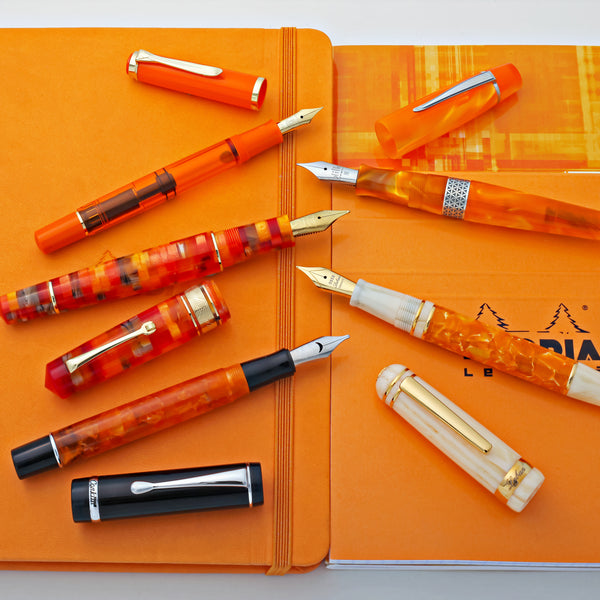
Your first time doesn't need to be expensive, nor messy. One of the big misconceptions people have about fountain pens is that they are spill disaster waiting to happen, primed to ruin every piece of clothing you own, as well as any carpet or rug in your home. Don't get me wrong, I'll occasionally have inky fingers from filling or cleaning a pen, but it has never caused a widespread disaster of my wardrobe. Most fountain pens are easier to fill than an inkjet printer. The easiest method is using an ink cartridge.
Maintenance shouldn't be much of a concern either. If you can manage to brush your teeth, take a shower, and keep a cactus alive, you can maintain a fountain pen. Most fountain pens use cartridge/converter filling systems, which are the least fussy to clean. Using a disposable ink cartridge is a simple, plug-and-play method to get your pen writing. Once the cartridge is spent, you can toss it and rinse the pen's section, nib, and feed under cool running tap water until it is clear. Let the nib air dry or blot it with a cloth. Then, you're golden to ink the pen again or put it away for safekeeping. My favorite option for fountain
pen maintenance is keeping it safe in a fountain pen case.
How Long Does a Fountain Pen Last?
If you keep your pen clean between inkings and you don't carelessly drop it on the nib or loan it to a klepto co-worker, you will have a writing instrument that will last you for life. If issues do arise in the future, most reputable pen manufacturers like Pilot, Sailor, Pelikan, Aurora, Parker, Waterman, Lamy, and Faber-Castell to name a few, uphold mechanical warranties should your pen experience a fountain pen not working scenario. Also, there are pen repair specialists and nib meisters that make a respectable living repairing, customizing, and restoring fountain pens. So, even in the event that your pen takes a swan dive off the desk resulting in a car wreck of a nib, you would be able to find someone to repair it and get it working again.